We Keep Using AI for Us. What About the Learner?
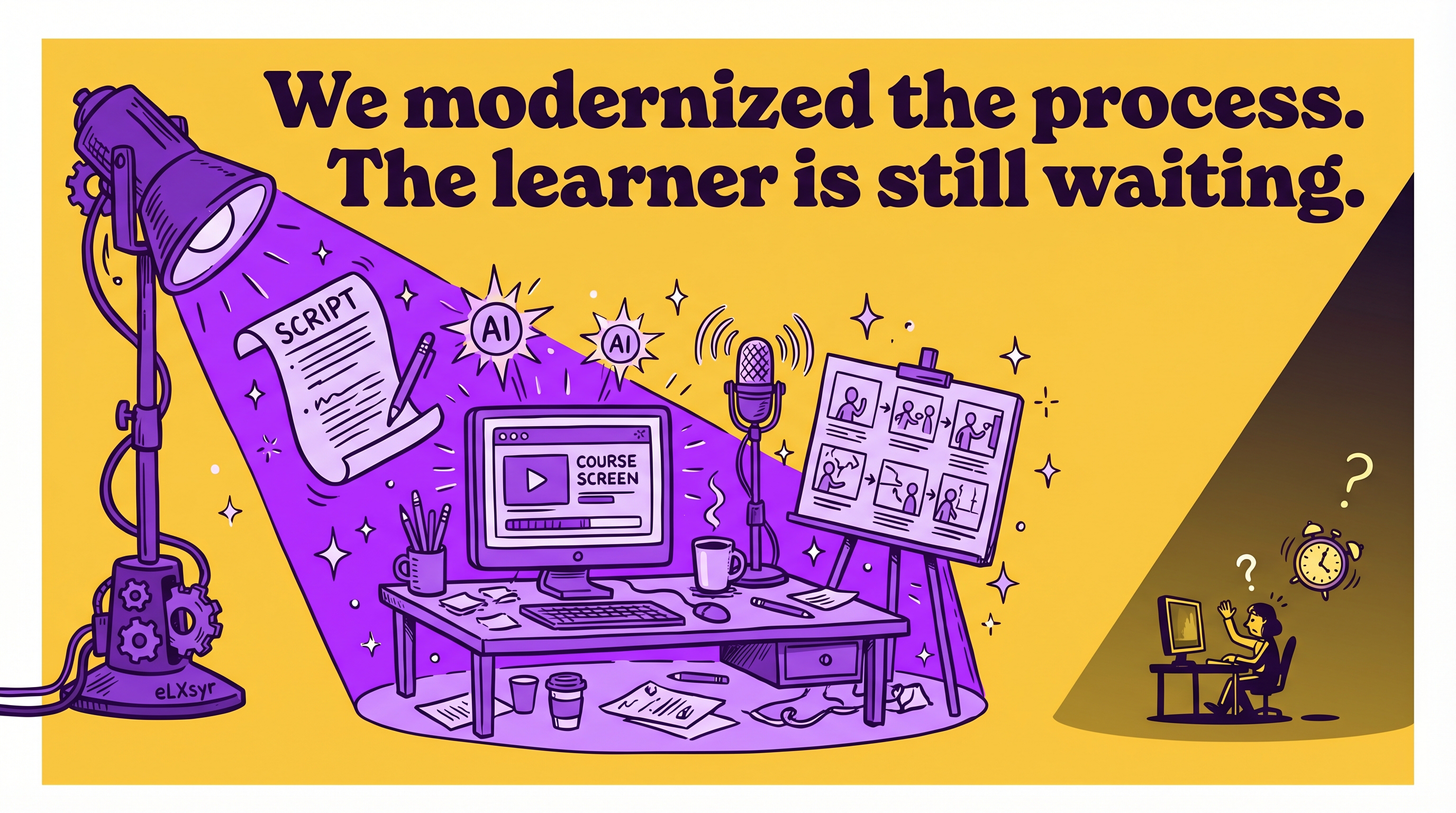
We're scared AI will replace us, but we keep using it to replace our own work. Maybe the smarter move is using AI for the learner, not just for us.
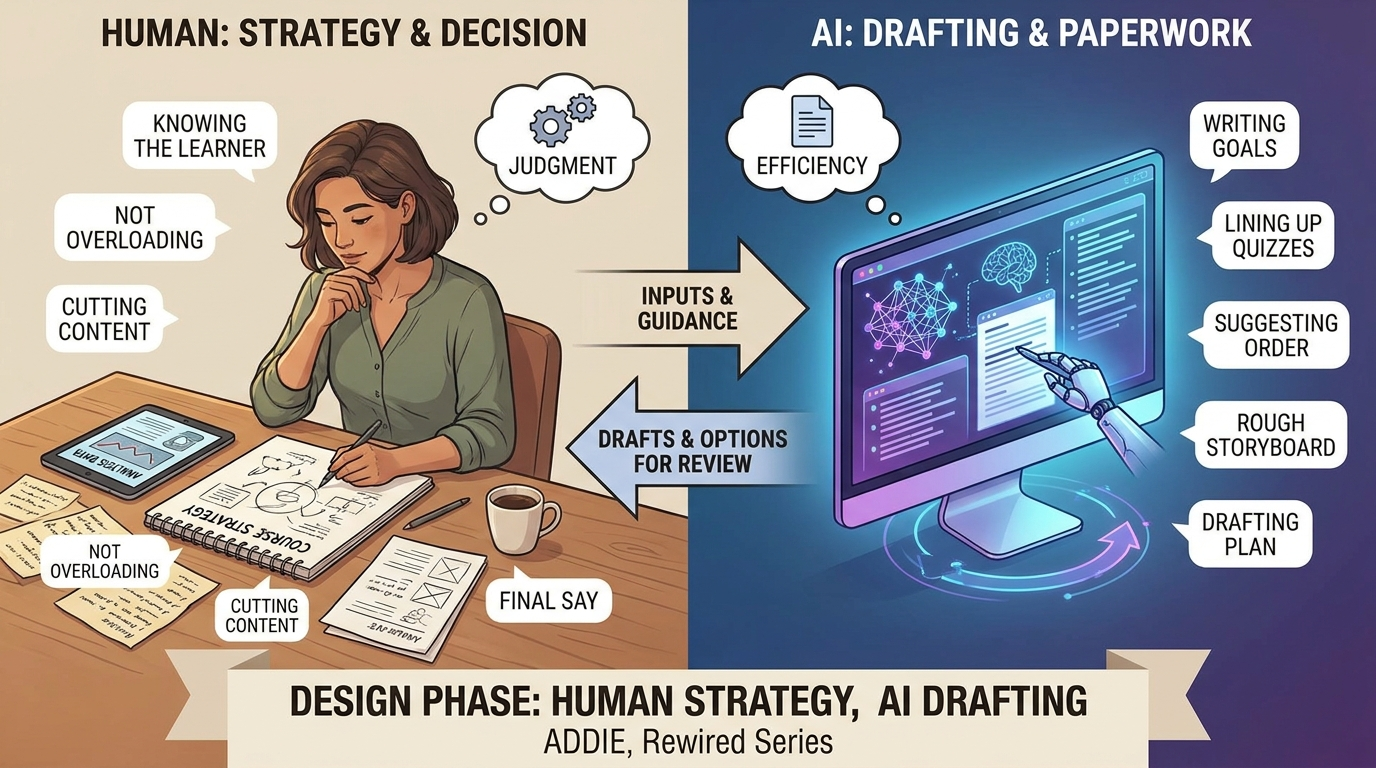
Every L&D team is being told the same thing right now. Modernize. Innovate. Use AI. So we do. We use AI to write scripts faster. To generate first drafts. To turn a 40-slide deck into a Rise course outline in ten minutes. To make the voiceover sound less robotic without hiring a voice actor.
All of that is real. It saves time. It is not nothing.
But I keep coming back to the same question. All of this AI use, who exactly is it for?
We Used AI to Speed Up the Work We Were Already Doing
Think about how most L&D teams actually use AI day to day. We use it to write faster. To summarize SME interviews. To create knowledge checks we would have spent an hour writing manually. To clean up narration scripts before recording.
These are production tasks. The kind of work that eats time but does not change the quality of the learning experience by itself.
We got more efficient at making the same thing.
Which is fine. Efficiency is good. But it is a strange definition of innovation when what we really did was use AI to do faster what we were already doing before.
Nobody Asked What AI Could Do for the Learner
Here is the part that does not get talked about enough.
We spent a lot of time thinking about how AI could help us produce content. Almost no time thinking about how AI could help the learner actually use it.
A learner sitting inside a compliance course. Confused about something on slide 14. The course keeps playing. The Q&A session is over. Their manager is busy. The job aid exists somewhere in a shared drive nobody remembers the path to.
What does AI do for that person in that moment?
For most organizations, the honest answer is: nothing. The AI was used to build the course. It was not deployed to support the learner inside it.
The Chatbot Conversation We Already Had (And Dropped)
Some teams experimented with chatbots a few years ago. They were going to sit inside the LMS. Learners could ask questions. It was going to change everything.
Most of those projects died quietly. The tech was clunky. The conversations were awkward. It took months to set up and the answers were unreliable enough that nobody trusted them.
So the idea got filed under "not ready yet" and L&D moved on.
But the underlying problem never went away. Learners still get stuck mid-course. They still forget things three weeks after training. They still go back to the job and cannot find the answer they need fast enough.
The chatbot idea was not wrong. The execution just was not there yet.
The Uncomfortable Part About Job Replacement
Here is the thing nobody wants to say out loud.
A lot of instructional designers are worried that AI is going to replace their jobs. And at the same time, the main way they are using AI is to automate the tasks that make up their job.
That is a fascinating way to prove the concern right.
If we keep pointing AI at our own production tasks and calling it innovation, we are basically doing the replacement work ourselves. We are just doing it slowly, one task at a time, without noticing.
The IDs who will not get replaced are the ones using AI to do something they could not do before. Not faster versions of old tasks. New kinds of support for learners that were not possible without this technology.
What It Actually Looks Like to Use AI for the Learner
Think about the two moments where learners need help the most.
The first is mid-course. Something is unclear. A term they do not recognize. A scenario that does not quite match the situation they deal with at work. They want to ask a question but there is no one to ask.
The second is back on the job, weeks later. They were trained on the process. They remember they were trained on it. They cannot remember the specific step they need right now and the SOP is either not findable or is 47 pages long.
Both of those moments are where performance actually lives. Not during the training. After it.
AI can sit inside a course and answer questions from content the designer has already built and curated. It can live inside a job aid and retrieve the right answer in three seconds instead of making the learner hunt through a document. The intelligence is not replacing the designer. It is carrying the designer's knowledge to the learner at the exact moment they need it.
The Designer Is Still the Intelligence Here
This is the part worth being clear about.
When AI is used to support a learner inside a course or a job aid, it is not making things up. It is not generating content on the fly. It is drawing from knowledge the instructional designer deliberately built, reviewed, and curated.
The bot does not decide what is accurate. The designer does. The bot does not decide what is in scope. The designer does. The bot just makes that curated knowledge available at the moment a learner needs it, in a way that feels like a conversation instead of a search.
That is not AI replacing the instructional designer. That is the instructional designer using AI to extend their reach past the scheduled training event.
So. Who Is the Innovation For?
Using AI to write a course faster is useful. It is not innovation. It is efficiency.
Innovation is when the learner gets something they did not have before. A question answered when the trainer is not in the room. An answer retrieved in ten seconds instead of five minutes. Support at the moment of need, not just the moment of training.
We have been asked to modernize. The question is whether we modernize the process of building courses or the experience of actually using them.
The learner is still waiting for us to catch up.
About eLXsyr
eLXsyr embeds AI-powered chatbots inside published Articulate Storyline and Rise courses and PDF job aids. No source files needed. No LMS changes required. No developer skills required. Just a bot that answers from content you build and curate, meeting learners at the moments that matter.
Learn more at elxsyr.com