
The Honest Bot: Why Saying 'I Don't Have That Information' Is the Right Answer
AI hallucination prevention in eLearning keeps bots reliable by making them admit limits. Learn why honesty beats wrong answers in training content.
You build an AI bot for your eLearning course. Learners ask questions, and the bot spits out confident answers that sound perfect.
Then one learner follows the advice. It leads them wrong. Now trust is broken, and your course looks unreliable.
This happens because the bot made up information. It hallucinated. You want AI hallucination prevention eLearning that stops this without killing the bot's usefulness.
What Is Actually Happening
AI hallucination means the bot generates false facts as if they are true. Large language models like those powering chatbots predict words based on patterns in training data. They lack true understanding, so gaps get filled with inventions.
Picture a compliance training module for a bank. The bot pulls from your knowledge base on anti-money laundering rules. A learner asks about a specific 2024 regulation update.
Your base has info up to 2023. The bot confidently states a fake update date and details. The learner reports it to compliance. Now your training is flagged as inaccurate.
How to Think About It
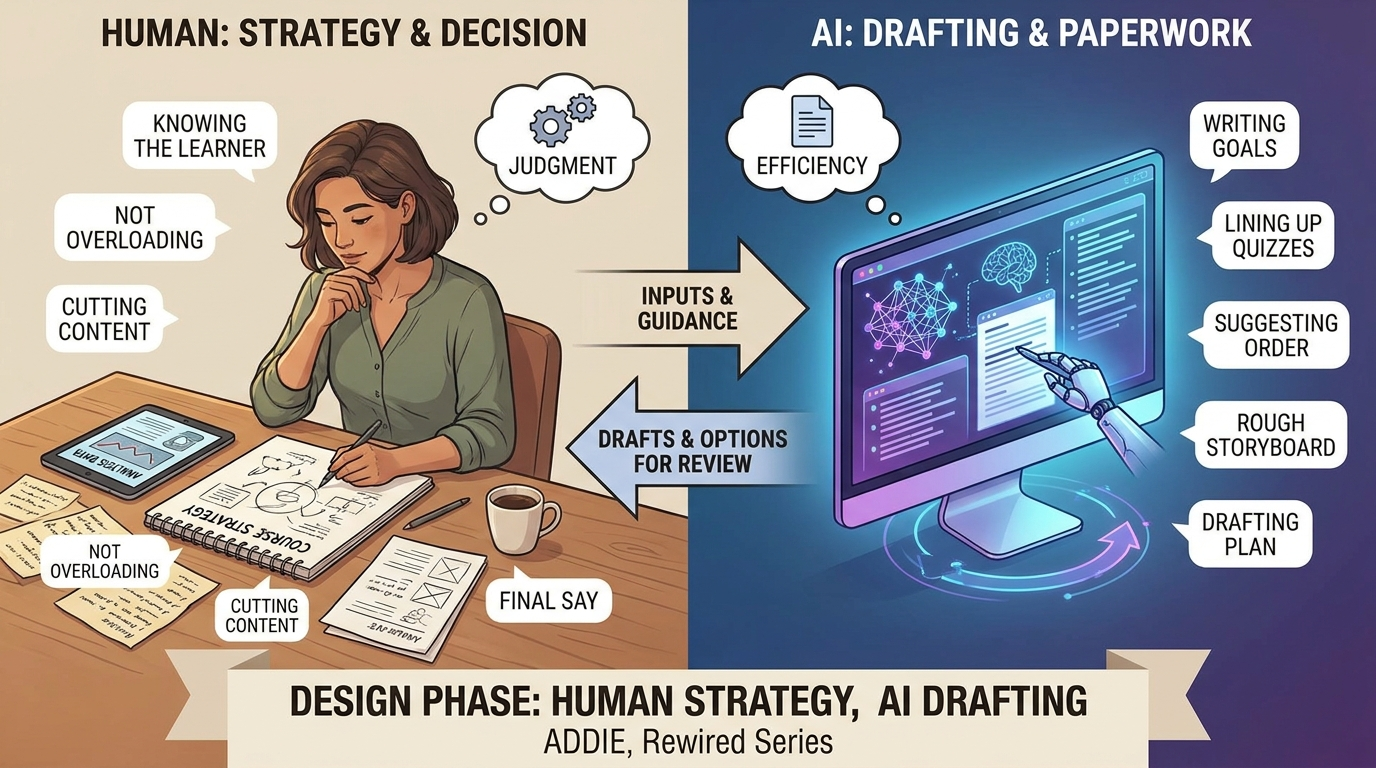
Shift your view from bots as all-knowing tutors to AI bot honesty as a safety feature. The goal is bounded competence: bots excel where you train them and bow out elsewhere.
Start with retrieval-augmented generation, or RAG. The bot searches your exact content first, answers only from matches, and stays silent on misses. This ties output to your control.
Next, honesty is a feature, not a bug. A bot saying "I don't have that information" builds long-term trust. Learners learn to rely on it for what it knows, not fear tricks.
Measure success by accuracy, not response volume. Track hallucination rates through learner feedback or spot-checks. Aim for zero fabrications over endless chit-chat.
Where This Gets Hard
Manual approaches work for one course. You write prompts, test queries, tweak knowledge bases by hand. But scale to 50 courses or 100 job aids, and testing explodes.
Edge cases multiply. Learners phrase questions oddly. Knowledge bases grow messy. Updates lag. At this point, tools like eLXsyr step in. They let designers embed controlled AI chatbots that stick to your content at scale, without generating extras. Manual limits hit hard here.
What to Watch Out For
Over-relying on generic prompts. You think "Be accurate" fixes it, but vague instructions let the model drift into patterns from its broad training. Always specify retrieval-only responses.
Ignoring query variations. Test not just direct questions but synonyms, typos, or multi-part asks. One untested phrasing sneaks in hallucinations.
Assuming clean knowledge bases. Old docs with errors or contradictions train the bot to mix facts. Audit content first; garbage in means garbage out, even with safeguards.
Worth Knowing
For leaders approving budgets, note that prevent AI hallucination training ties to legal risks in regulated fields like healthcare or finance. One bad answer can trigger audits. Freelancers benefit from open-source guardrails like those in LangChain's retrieval QA chains, but pair them with usage logging to catch drifts early. Solo designers save time by chunking PDFs into small, indexed pieces for precise retrieval.
Quick Checklist
- Chunk knowledge base into small, focused sections under 500 words each.
- Set retrieval threshold: require 80% match confidence before answering.
- Force fallback phrase: "I don't have that information. Check page X or ask your manager."
- Test 50 diverse learner queries per module, including tricks and follow-ups.
- Log all bot responses for weekly review of confidence scores.
- Update base quarterly; flag outdated sections with "superseded" tags.
FAQ
How do I stop my AI bot from hallucinating in eLearning courses?
Use RAG to ground answers in your content only. Add strict prompts that require sources for every response. Test rigorously and monitor logs.
What makes an AI bot honest in training?
AI bot honesty comes from design: retrieval limits, confidence checks, and fallback admissions. It admits gaps instead of guessing.
Is safe AI behavior in learning possible without custom coding?
Yes, platforms with built-in governance handle it. They enforce safe AI behavior in learning through controlled retrieval and no-generation rules, scalable for teams.