How to Explain AI Course Support to a Skeptical Stakeholder
Struggling to make the AI in L&D business case? Learn a simple framework to show skeptical stakeholders why AI course support boosts learning without the hype.
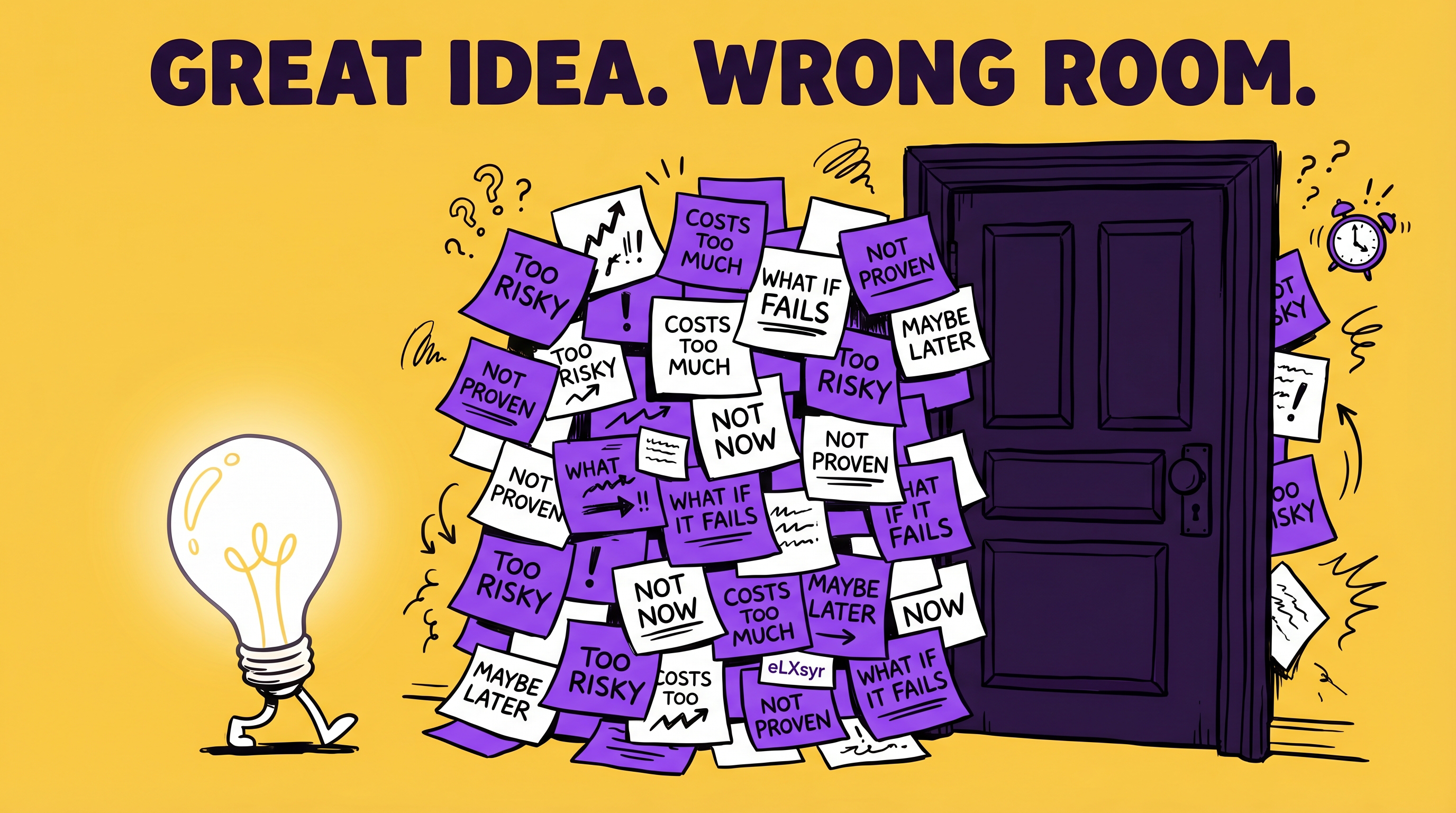
You have a great idea for AI course support. Your stakeholder hears "AI" and shuts down. They worry it will confuse learners or waste money on tech that does not deliver.
Stakeholders see too many failed tech pitches. They want proof it fixes real problems in training. Without a clear AI in L&D business case, your project stalls.
This leaves you stuck. You know AI can make courses smarter. But they need to see it your way first.
What Is Actually Happening
Stakeholders face constant pressure to cut training costs. Courses cost time and money to build. Learners forget material fast or skip it altogether.
Picture this. A sales team gets new product training. They have questions during rollout. Without quick answers, they guess and make errors costing the company sales.
Traditional support means more emails to trainers or long help docs no one reads. This ties up experts and slows everyone down. Skepticism grows because past fixes did not stick.
How to Think About It
Start with the core shift. AI course support changes courses from static reads to active helpers. It pulls answers from your own content, not the wild web.
Frame it as risk reducer. Show how it cuts errors by giving instant, accurate help. Link it to business wins like faster onboarding or fewer compliance mistakes.
Focus on Their Goals
Stakeholders care about results, not tech specs. Tie AI to metrics they track, like time to productivity or error rates. Skip the buzzwords.
Use simple math. If support saves 10 hours per learner per year at $50 an hour, that adds up fast. Ground it in your company's numbers.
Build from Familiar
Compare to tools they already trust. Like search in a company database, but smarter and course-specific. This lowers the fear factor.
Explain retrieval first. AI scans your knowledge base for exact matches. No hallucinations because it sticks to your content.
Show Controlled Scale
Highlight control. Designers build the knowledge base. AI stays on script. This matches their need for oversight.
Think pilot first. Test on one course. Measure uptake and feedback. Use real data to prove the eLearning AI stakeholder buy-in.
Where This Gets Hard
Manual setups work for one course. You upload PDFs or quizzes and tweak prompts. But scaling to dozens means rebuilding bases each time, tagging content, and testing endlessly.
This eats weeks. Updates break things. For real L&D AI adoption across teams, you need a platform that embeds AI chatbots into courses and job aids seamlessly. eLXsyr lets designers control knowledge bases at scale without coding.
What to Watch Out For
Overpromising magic. Stakeholders expect AI to teach everything. It excels at lookup, not deep coaching. Set expectations on scope.
Ignoring data prep. Garbage content means bad answers. Spend time curating your base or it backfires.
Skipping pilots. Jumping to full rollout without tests leads to resistance. Small wins build momentum.
Worth Knowing
For leaders approving budgets, look at total ownership cost. AI support drops long-term help desk tickets by focusing help in-course. Freelancers can use free tools like ChatGPT plugins for prototypes, but check accuracy against your materials. Teams benefit from shared bases that update once for all courses.
Quick Checklist
- Map pain points: List top 3 learner frustrations and how AI fixes them.
- Gather baselines: Note current support time and costs per course.
- Prep demo content: Build a 5-minute knowledge base from real materials.
- Run a mini-pilot: Test with 10 users and log questions answered.
- Calculate ROI: Project savings on one metric like reduced trainer time.
- Plan fallback: Outline non-AI options if adoption lags.
FAQ
How do I build an AI in L&D business case quickly?
Pick one high-impact course. Track support requests before and after adding AI. Show the drop in time spent, using your numbers.
What if my stakeholder hates tech demos?
Use stories from similar industries. Share a quick video of AI answering real questions from your content. Keep it under 2 minutes.
Will AI replace my trainers?
No. It handles routine questions so trainers focus on complex guidance. Most see trainer time freed up by 30-50% on average.